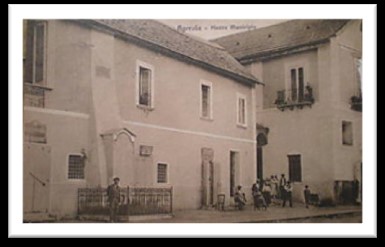
CASA DELLA CORTE
This ancient building renovated several times, housed Agerola’s Town Hall from 1862 to 1982. From 1846 to 1890 it was also home to a Royal District Judge with an adjoining jail (see the sturdy metal grill at one of the ground floor windows). In earlier centuries, when it was called “House of the Court,” it housed a bajular court with jurisdiction over Agerola, Praiano and Vettica Maggiore. It was established there by Antonio Piccolomini (nephew of Pope Pius II and son-in-law of King Ferrante D’Aragona) shortly after he obtained the Duchy of Amalfi as a fiefdom (1461). A Captain and a Governor resided there, the latter had to be a man of law and had the privilege of replacing the judge of the Ducal Court of Amalfi when the latter was absent.
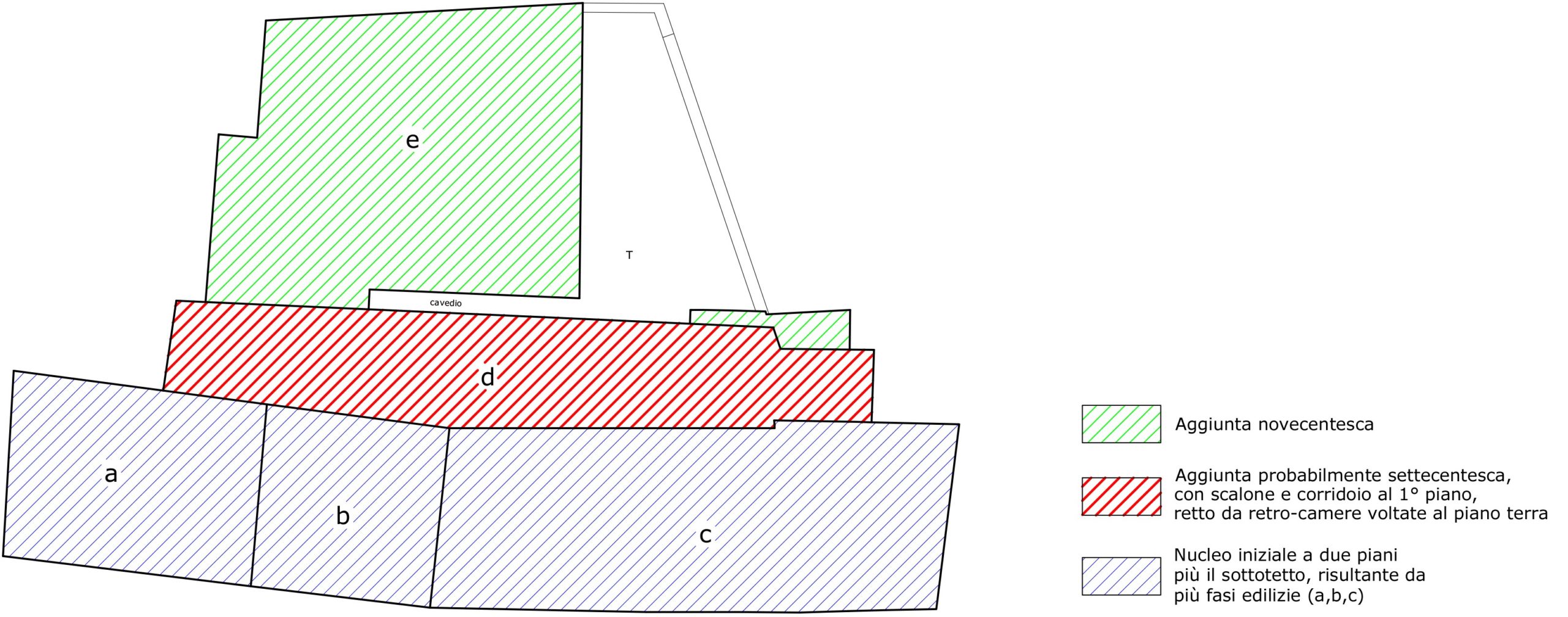
RECENT RENEWALS
The renovation work on the building, which began in the year 2003, involved the replacement of the
second-floor slab and the sloping double-pitch roof, the restoration of the exterior facades, and the
implementation of complementary extraordinary maintenance works such as plastering, upgrading of
technological systems, replacement of fixtures and floors, and various finishing works.
In the year 2011, reconstruction ,then, continued with a series of works, completing the previous
renovation work, which, in addition to covering the replacement and adaptation to earthquake-
resistant regulations of the Council Chamber's roofing slab and the execution of complementary
works necessary to make the Council Chamber usable again, it had as the main objective the
architectural upgrading of the building, including the main facade, and the attribution of a new
function to the rooms on the second floor and the attic room, so as to restore prestige and
importance to a structure of such great historical and monumental value.
The attic room, which remained without access until the completion works, was in the year 2011 the
subject of a rigorous renovation and redevelopment aimed at giving the area the function of an
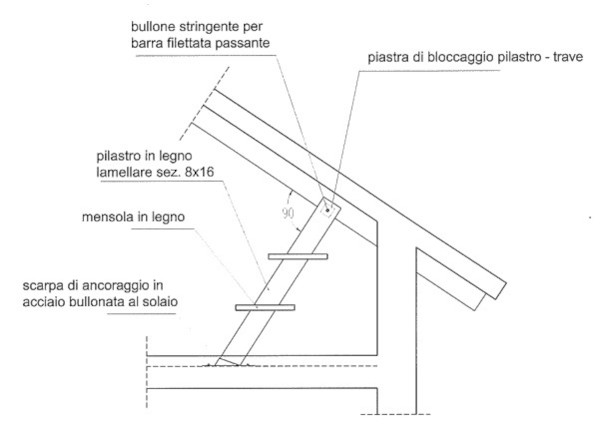
exhibition pavilion, for Agerola’s civic museum. Two inclined wooden elements, connected to the attic
with appropriate steel plates and arranged so as to form a right angle with the inclined roof beam
(see construction detail), have been mounted in correspondence with each individual roof beam; the
aforementioned elements, which in an overall view give the environment the appearance of the
interior of a boat, play both a role of a structural nature and support of the roof covering and a
functional role by acting as a component of furniture and as a support structure for the exhibition
shelves. Undoubtedly, then, the combination and use of appropriate color shades and the creation of
complementary display structures also contributed to the charm and elegance of the museum
environment. The accessibility to the attic room was duly allowed by making a new wooden staircase
with double ramps, inside the stairwell and in connection with the pre-existing main ramp to the
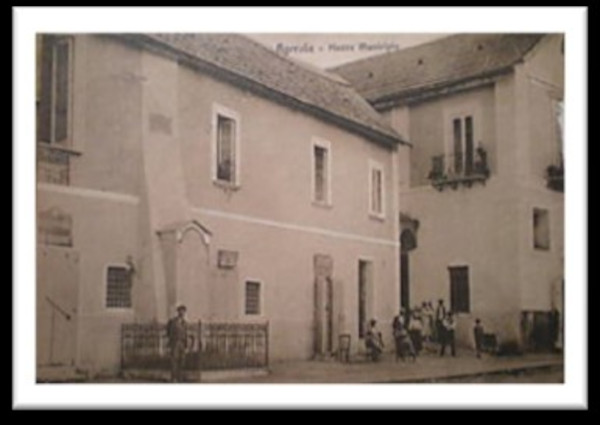
second floor. The main facade, facing the square, was rigorously reinstated by restoring the
appearance it had in the 1920s (see photo) with the reconstruction of the first stringcourse band and
a structure, leaning against the barbican, housing the marble panel of the soldiers deceased in World
War I.
A plaque dedicated to Roberto Bracco has also been reinstated on the facade, inscribed on it the
catchphrase for the 150th anniversary of birth of the Italian writer and playwright; a travertine portal
has also been mounted at the main entrance, with the sign of the civic museum carved on it.
Today it is home to the Ethnoanthropological Museum. It houses "Pasquale Gentile" Council
Chamber, the historical section of the Municipal Library, with an adjoining study room, and exhibition
halls used for visual art exhibitions called "Agerolaarte," which are held every year in the period from
May to September.
Restoration and layout of the Agerola Civic Museum by architects Aldo Imer and Matteo Naclerio.