HISTORICAL NOTES
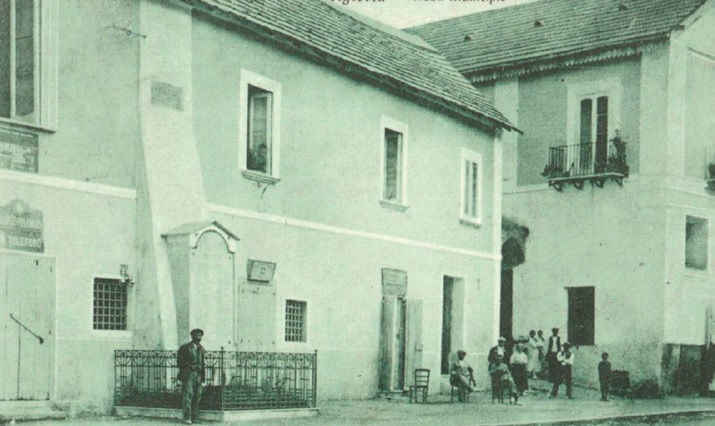
The territory of Agerola was first reached by the Osci, ancient Campanian people who stemmed from the union of the strong Samnite with the Opian mountaineers, in the 5th century B.C. The Osci or Oschi pushed as far as Sorrento through the Lattari Mountains after founding the Republic of Nucera, which in 474 B.C. included the territories of Nocera, Pompeii, Stabia, Herculaneum and Sorrento. Roman times ruins and artifacts were unearthed, at different times, in the Radicosa area, in Ponte hamlet and in the St. Barbara grotto. Vases, oil lamps, coins of the early Roman emperors, amphorae of various sizes, libation bowls, various terracotta vases, bricks, grindstones, remains of buildings and courtyards, pavements of ancient roads, metal objects, etc. were discovered at these sites. Among the various settlements that occurred over the centuries we find that in 89 B.C., when Stabia and Gragnano were assaulted by the soldiers of the Roman general Lucius Cornelius Sulla, many refugees from these cities relocated in our hills’ villages. The population growth of Agerola was also influenced by the inhabitants of the coastal cities trying to escape the Saracens’ devastations.
From the early Middle Ages to the Lombard period
At the time when Rome was proceeding toward an inevitable decline, Agerola underwent a
transformation of considerable importance, as the barbarian invasions positively affected its
demographic growth. From many surrounding areas people poured, onto the slopes of the Lattari
Mountains, in search of safety. In the year 535 the Eastern Emperor Justinian sent Belisarius to combat the Goths who had settled in Campania. He succeeded, but the latter returned south after a short time. The emperor in 551 had his trusted general Narses move against them. The first clash was resolved with a victory for the Byzantines, but it did not end the war. The Goths with their new king, Teia, returned and fought Narses' army in a very violent battle in the hills near Agerola in 553. It seems that the area of Pino was the scene of that bloody two-day melee during which Teia fell on the field and his army dispersed disorderly. It is from that period that several churches were built in our area, in fact Agerola " was one of the first to undertake the construction of aediculas, shrines and other sacred monuments." On the work and role of the Church were founded, then, the charitable associations and the monasteries
of piety of the Naclerio, Imperati, Cavaliere, Casanova families and S. Antonio Abate Fund , which was followed by the establishment of lay congregations.
After fifteen years of Byzantine rule, in 568 the Lombards, under the command of King Alboin, occupied Campania and entrusted its government to Zotone in the year 571. In the first half of the 600s, the Benevento Lombards pushed as far as Salerno and in 786 with Duke Arechi attacked the Amalfi Coast, jealous of Amalfi's economic power. On that occasion other inhabitants of the Coast moved up our hills.
Meanwhile, Amalfi, having become a populous and active city, broke free from the Duchy of Naples and began its journey toward independence.
Agerola, gravitating in the Amalfi area, benefited greatly from its prosperity, as it traded farmland produce, dairy products and milk, wool, and coals on the Coast’s markets.
From the arrival of the Saracens to the Aragonese period.
The Saracens i.e., the Arabs, plundered the towns and villages along Sorrento Peninsula coast, destroyed churches, robbed treasures, killed people of all ages and sex, burned houses and hoarded maidens to sell them as slaves. The Convent of Cospiti also experienced a Saracen assault.
Entire families, from the Amalfi Coast, to flee from the massacres, relocated in Agerola. In fact, many Amalfitan origin surnames are recurrent among the Agerola residents: Naclerio, Apuzzo, Vespoli, Coppola, Casanova, etc.
Agerola, during the raging Saracen and Turkish assaults, became a territory of refugees. What did honor to our ancestors, anciently labeled rough mountain people, was the spirit of hospitality they offered to the people who arrived here distraught and hungry. We find news of a hasty escape in the Sorrento chronicle escapee, who reached Agerola with other refugees on the night of June 13, 1558 “Ante tertiam decimam diem mensis Junii (… ) ecce classis Turcharum triremium (…) nos autem mane terram Agerolae petivimus (…)” (on the night of the 13th of June (…) here was the fleet of one hundred Turkish triremes (…) we then reached the land of Agerola). On June 27, however, the Saracens attacked the coast of Amalfi.
In the year 1068 the Republic of Amalfi due to the inability and weakness of its government ceased to exit and Amalfi fell under Norman influence.
In 1100 the Normans took possession of the Duchy of Amalfi, a possession that lasted for a long period.
From this moment we begin to find evidence of land cultivated with roses in Agerola, commonly called rosaries. The essence of roses, or rosewater, produced in Agerola was particularly appreciated and requested by the aristocrats and courtiers at the Court of Naples. In the Memoirs of Matteo Camera, we find that “in medieval times there was a great cultivation of white roses ‘rosaria’ from which were extracted so much sought after essences and distilled water”.
In May 1198 Frederick II of Swabia ascended the throne of Sicily and due to his minor age was placed under the tutelage of Pope Innocent II. On December 13, 1250, Frederick II died at the age of 56. He had disposed in his will that his natural son Manfredi should provisionally rule the Kingdom of Naples as Vicar. But Pope Innocent IV claimed the sovereignty of the Church over the Kingdom. Agerola then asked the pope for some privileges it had lost, and Innocent IV granted them to him with a proclamation of 5 December 1254. However, his successor, Alexander IV, enfeoffed the lands of the Duchy of Amalfi and assigned them on the 9 February 1254 to Berthold, Otto and Louis of Hohembruk, faithful supporters of the papacy. Manfredi, having regained the kingdom in 1257, ruled for a few more years in Agerola and granted two privileges: inclusion in the Royal State Property and the right to appoint his own judge, provided that he was a native of the Amalfi area. In 1268 the Swabian period came to an end.
The seed of Agerola autonomy was sown with the advent of the Angevins, when Agerola had the first elected representatives of the people to whom Robert of Anjou recognized, in 1339, the partial right to administration. At the beginning, those elected would have only a few tasks: they will constitute the civic parliament, i.e. the university.
Agerola with Charles I again suffered again fiefdom because the king gave it to one of his officers, who, having lived dissolutely, not only made debts and applied strong fiscal pressure, but he even hoarded goods to resell them at a higher price.
The Angevin king imposed the salt tax for the first time. He confirmed the storage tax on pitch, iron, steel, slaughter, meat, fish, oil and wine. Agerola inhabitants were also burdened with maintenance tax for the repairs and for the construction of new vessels against the Turks.
The documents that registered the state of the population in 1278, calculated by the Angevins by fireplace, ( i.e. by family unit), recorded Agerola pro focolafibus 126 et unc. 311/2 (i.e. 126 households with a total contribution of 311/2 ounces. Agerola was the most populous municipality after Amalfi, which had 267 fireplaces.
Agerola’s citizens (under King Charles of Anjou) were subject to the conscription of land and the supply of timber for construction. Some worked as sawyers in the Amalfi arsenals, while in Naples, in 1280, the master carpenters Tommaso and Lorenzo Cuomo, Deodato Amalfitano, Andrea and Pasquale di Giustino and Matteo Avitabile worked in the royal palace.
The judges of Agerola of that time, of whom we have information, were Capuano de Casanova in 1261 and Iacobo Crisconi in 1282. On May 14, 1284, Charles I donated the Land of Agerola to the soldier Landulf of Aquinas for the annual value of sixty ounces. Agerola’s citizens appealed against this vassalage and refused to recognize the baiul, the judge, the master and the other officials appointed by the vassal.
Yet King Charles knew Agerola, because he used to buy pork from our merchant Pietro Iovane, from whom he ordered salami, sausages, hams and bacon on behalf of the court of Naples “de porco boni odoris et saporis” (pork with a good smell and taste). The same Court also replenished itself with “cofinas“, i.e. containers made by our basket makers with chestnut wood strips.
In 1294 Charles II granted the Land of Agerola to the French Hugh de Sully, but Hugh refused therefore Agerola was ceded to the noble Ludovico de’ Monti for the value of one hundred ounces. On 5 May 1309 Charles II died and was succeeded by his son Robert of Anjou. His coronation cost the lands and cities of the former duchy the enormous sum of over four hundred and two ounces, paid in installments.
For his part, Pope Clement V also imposed sacrifices on the churches with tithes. Twenty-four tareni were asked of the Archpriesthood of Agerola, which were promptly paid. The prompt fulfillment did not please the bishop of Amalfi, so our Archpriest was sentenced to a fine and, it seems, even a short period of imprisonment. The lack of local power, the non-existence of repressive forces, the raids of criminals, exposed the population of Agerola and the authorities themselves to every danger. To this was added the plague of 1348. In 1381 Duke Charles of Durrës, living at the court of Queen Joan, took possession of the kingdom.
The mayors and representatives of the Duchy of Amalfi expressed their favor and asked in exchange to be kept in the Royal Property with the enjoyment of the ancient privileges.
In 1398 the king enfeoffed the Duchy to Wenceslas Sanseverino and deprived Agerola of the privilege of belonging to the Royal Duchy. The vassalage had very negative implications on Agerola’s economy because new taxes were imposed.
In 1438 René of Anjou became King of Naples and Alfonso of Aragon, after preparing the marriage between his aunt Eleonora of Aragon and Count Raimondo del Balzo Orsini, gave them the Duchy of Amalfi and its lands. In 1458 Alfonso I of Aragon died and was succeeded by his son Ferdinand. Under René of Anjou and Ferdinand at Agerola were introduced merino sheeps from Spain and soon they spread to the whole kingdom.
An important document relating to the art of silk in Agerola is transcribed in the Memoirs of Matteo Camera. It states, among other things: “The principal art of this land is the art of silk spinners, and about two thousand five hundred pounds of silk are worked there every year; and therefore, it keeps forty spinners at work to toil and twist it in twenty thousand pounds of silk a year; women earn three thousand ducats annually in this work; the working men one thousand and three hundred ducats; The merchants who make it function, earn at least three pugs for each pound.”
During the war between the Angevins and the Aragonese, Agerola’s citizens sided with the d’Anjou, turning their faces to Ferdinand, even though he had granted immunity and franchises on 20 March 1459. In response, the d’Anjou family had Agerola administered by a certain Troilus of Montefalcone.
The year 1462 began the era of the Piccolominis. On the positive side, the Piccolomini ensured public peace in the municipalities of Agerola and Praiano, sending to Agerola a captain and a governor with jurisdiction over both municipalities.
Even then, the savory pork industry was highly developed. In fact, there was a commercial agreement between Amalfi and Genoa for the supply of salted and smoked meat from Agerola.
In 1484 Nicola Pagliaminuta was a trustee of the Piccolomini family and from him came an interesting proposal for the people of Agerola: to build a road from Amalfi to Gragnano through Agerola.
But our fellow citizens opposed it, they feared external raids and assaults and, above all, epidemic infections, which were very frequent at the time. In 1493 Piccolomini died and was succeeded by his son Alfonso, who married Joanna of Aragon. We are now nearing the end of the Aragonese rule, which lasted fifty-nine years; the end was marked in 1503, when the Kingdom of Naples was conquered by the Spanish.
In 1500 Agerola was infested by the plague and while the disease raged and decimated families, a new disease hit the population, banditry. A gang of criminals, made up of different elements and under the command of a certain Antonio Brancato, was guilty of crimes and, above all, of robbery and extortion, when here the was another misfortune: the earthquake of April 15, 1561, which caused damage to the houses and dried up the cisterns due to the lesions in the walls, damages that had to be repaired before autumn came.
In 1582 Giovanni Piccolomini also died and with his death also ended the Duchy of Amalfi, which lasted one hundred and twenty-three years, because Duke Giovanni’s widow immediately after the death of her husband put the Duchy up for sale. In 1583 Agerola paid its share of the ransom and was restored to the royal estate.
Spanish Period
After 1583 the history of the former Duchy of Amalfi and, therefore, of Agerola became entwined with the events of the Kingdom of Naples.
Acaptain was sent from Naples to Agerola to represent the power with jurisdiction over the municipality of Praiano. At that time, our country had two hundred and fifty-three fires and had two particularly active sectors: that of salted pork meat and that of the art of silk, but no less famous continued to be the production of rose water, distilled from white rose petals.
The famous perfume and pork hams were donated by the University of Agerola to the viceroy of Naples Francesco de Castro when, on April 13, 1602, he came to the tomb of St. Andrew in Amalfi.
Corruption, misery, discord, and pestilence, to which was added the dramatic eruption of Vesuvius in 1634, made the situation in the Neapolitan Kingdom critical.
The difficulties and unrest culminated in the revolt of Masaniello on 7 July 1647 against Philip IV and his viceroy Arcos. Two people from Agerola also took part in the upheavals in Naples: Andrea and Giambattista Naclerio. The two brothers were among those who started the riots on the night of June 6, 1647, with the burning of the fruit tax shed in Piazza Mercato. Giambattista, who had also rendered services to Viceroy Arcos, was captured on Andrea miraculously managed to save himself. Shocking events also took place at the boundaries of Agerola. In fact, the citizens of Gragnano revolted against the Spanish soldiers. At about three-thirty-three in the afternoon of May 14, 1685, and quarter to five in the afternoon of June 5, 1688, strong earthquakes occurred. Many houses and cisterns were damaged. Pope Innocent XI, having heard of the serious situation that had arisen, especially after the second earthquake, sent the population a large sum for the relief of the injured.
Meanwhile, in 1693 Cardinal Lorenzo Brancati of the Brancati barons, founder of the monastery for cloistered nuns erected in the hamlet of Campora and dedicated to St. Teresa, died.
The insurrection of Naples and the upheavals of Gragnano did not go unnoticed in the eyes of the people of Agerola.
Our town lacked internal and external roads, it was administered by a small parliament that was renewed annually in a completely undemocratic way, it had a population that lived in hardship. The petty bourgeoisie, made up of a few families, was the only social class that knew well-being.
Our laborers were forced to work with starvation wages and with compensation in produce, duties and taxes were often applied in a completely brainy way by the ruling class. The sylvan industry and the craft of wood, in which shipwrights, cutters, stumpers, sawyers, cleavers, basket makers, charcoal burners and pebble makers worked, guaranteed only very modest incomes.
On the other hand, the kilns, probably fifteen in number, churned out two products in great demand, lime and charcoal.
In 1705 Agerola had 2304 inhabitants, most of whom were dedicated to agriculture and breeding, whose growth was very limited due to marketing difficulties. Well established was the art of silk and of salting pork.
In the city of Naples our silk merchants constituted a group of the petty bourgeoisie and elected their representative. From Agerola arrived in Naples, with boats departing from Castellammare, fruit, handcrafts, and compressed snow for ice-cream manufacturing.
However, for most of the population, economic hardship deteriorated further, so the people of Agerola intensified their consumption of bread made with Indian wheat, (i.e. maize), avoiding making bread with the expensive wheat flour affected by high taxes.
While the number of families was constantly increasing, the average number of people per family was decreasing. The number of households living in their own homes was increasing.
Bourbon Period
With the advent on the throne of Naples of the Infante Charles of Bourbon, who became king in 1734 under the name of Charles II, the viceroyalty that lasted two hundred and thirty years came to an end and the work of the bourbons began. The king minted new coins, suppressed criminality, and put an end to the abuses of the barons and crooked officials.
In the 1700s, the archbishops of Amalfi, mons. Michele Bologna, Pietro Agostino Sforza and Antonio Puoti left interesting information about Agerola, its churches, institutions, clergy, laity, and education.
From their reports we also learn that illiteracy was widespread in Agerola and that many priests were ordered to take personally charge of the education of boys and girls or through talented and distinguished men of each parish. On 6 September 1759 Charles II renounced the throne of Naples in favor of his son Ferdinand IV of Bourbon. During Ferdinand’s reign two dramatic calamities struck Agerola, the disastrous flood of 19 January 1764 and the terrible plague that broke out in the summer of the same year.
The people of Agerola, as the difficulties of traffic with the neighboring centers persisted, were forced to import and export goods still on impassable mountain roads with all the due consequences.
In turn, the community had to pay taxes and duties to the four tax collectors chosen by the University.
The Neapolitan Republic of 1799
When in 1799 the Neapolitan Republic was proclaimed in Naples, the tree of Liberty, as a symbol of the new republican order. was planted in the squares of the municipalities of the Kingdom, upon hearing the news of the events. The municipal authorities of Agerola planted the tree in the hamlet of Campora, probably in the small square adjacent to the church of S. Martino Vescovo. But soon the mood changed towards the French.
To fight them, in February the English fleet landed five hundred soldiers on the beaches of Castellammare, under the protection of the on-board batteries, From the very first clashes there were deaths, injuries and destruction of various kinds. In the end, Castellammare fell into the hands of the Bourbons. The French then attacked Gragnano and Agerola’s citizens, with a gesture of great altruism and generosity, put pressure on the University to give help to the people of Gragnano.
“We have to help the City of Gragnano, which is fighting with the seductive Republic.” The invitation was immediately accepted by those present who armed themselves in aid of the said city of Gragnano.
The volunteers were armed and sent to the sites of the fighting, but there is no information on their employment or fate. The situation did not improve when the French, were restored in Naples by Napoleon Bonaparte, and the new king Joseph Bonaparte, brother of the great emperor.
The long-standing problems of Agerola were inherited by the nineteenth century.
The Early Nineteenth Century
After the tragic end of the sad experience of the Neapolitan Republic in 1799 and the return of the Bourbons to Naples, some brigands returned to Agerola after having been mobilized together with the notorious Pasquale Lauritano by the English to oppose the French. The only one who did not give news of himself was Lauritano, who says he was lost in the maze of Neapolitan delinquency.
We must reiterate that life in Agerola at that time was so bad that our porters and silk millers emigrated and that meat, for most people, was an inaccessible food. Poverty affected not only people’s health, but also the state of housing and clothing.
The women of that time worked just like men in the countryside, at home and sometimes even in the mountains.
A positive contribution to the improvement of the condition of the economy was attained by farming potatoes. The tuber, introduced in Campania at the beginning of the eighteenth century and in Agerola in 1782, was not only an economical nutrition for our people, but was also widely used in animal feed. The biancona variety of Agerola was cultivated on a large scale because it was very popular in nearby markets.
Its fame came to the attention of the provincial authorities, to the point that the intendant Ferrante gave instructions to all the mayors and parish priests of the province of Principato Citeriore on the cultivation, conservation and seasoning of the potato, which was followed by an invitation to develop its cultivation as well as “in tenimento di Agerola, emporium of the potato of greatest possible perfection“.
The Risorgimento yearning.
The liberal-Carbonaro movement, which was now spreading almost everywhere, and the massive process of the Risorgimento began, it was joined by Don Giuseppe Naclerio, parish priest of S. Pietro Apostolo in the Pianillo hamlet, Don Melchiorre Acampora, parish priest of the Campora hamlet, Don Vincenzo Villani, parish priest of S. Matteo Apostolo in the Bomerano hamlet and some citizens, including Costantino and Salvatore Fusco and Ferdinando Avitabile.
Meanwhile, after the birth of the Carboneria in Agerola, the Giovine Italia movement also arose. And we heard of a republic. The architect of the diffusion of revolutionary ideas among the educated youth of Agerola was our fellow citizen Antonio De Stefano, a merchant in Naples. De Stefano, convinced of the goodness of Mazzini’s thought, courageously and generously supported the request for the Constitution.
Arrested and tried, he was sentenced to prison with solitary confinement on the island of Ventotene. Freed following Garibaldi’s arrival in Naples, De Stefano managed to be part of the National Guard to fight against brigandage.
While the Thousand were advancing into Sicily following the landing of 17 May, an alarming misery was raging in Agerola, because there had been a meagre production of chestnuts and potatoes. After Garibaldi’s expedition on the Volturno and king Francis II had getaway, our fate was now linked of the rest of Italy.
Consequently, here in Agerola there was an air of expectation, between the enthusiasm of some liberals and the apprehension and discouragement of the pro-Bourbons.
On 21 October 1860 there was the first popular reaction: in the streets and in the churches of Agerola there was an open praise of Francis II of Bourbon and demonstrations against the House of Savoy. These first forms of anti-unification reaction were followed by a much more serious phenomenon, that of brigandage. In 1863 brigandage was rampant in Agerola.
The birth of two bands, that of Giuseppe Apuzzo, known as ‘o Cascettone, and that of Francesco Vuolo, ‘o Viettechese, was the cause of many difficulties among the population, so Charity had to assist some mountain laborers who could not, for safety reasons, go to work in the woods. One of our fellow citizens, Don Gennaro Avitabile, Extraordinary Commissioner of the Municipality, bravely placed himself at the head of the National Guard and pursued some brigands.
The undertaking did not fail because his comrades rose to the occasion. Guard Felice Coccia earned the Silver Medal for Valor on the field. In 1864 brigandage raised its aim and kidnapped the Marquis Stanislao del Tufo in the locality of S. Croce, on his way to Agerola together with other people.
The release of the kidnapped took place only after a few days.
The expenses for the repression of the brigands became very heavy and equally heavy were those to assist the numerous poor, to which were added the allowances to the families of the criminals captured and deported to Sardinia. Finally, in 1871, brigandage came to an end.
The ringleader Pietro Oliva was murdered by his own followers. The death of the fearsome brigand removed the apprehensions of an entire population. When Oliva’s body was transported to Piazza S. Lazzaro and was recognized by the citizens and the sub-prefect of Castellammare, there was a sigh of relief.
But another important thing of this period was that in 1875 the construction of the road finally began with the blasting of a mine detonated at the foot of the Palombelle hill.
After this event, on August 18, 1875, the Municipal Administration examined the first project for the internal roads, Agerola seemed to have woken up from a long torpor and the ambitions of the Agerola people were no longer restrained. The work was completed on 23 August 1880 with the completion of the Palombelle tunnel. After the embrace of the teams of miners, taralli were distributed to everyone and wine was drawn from the large barrel placed in front of the tunnel. At the same time, a marble plaque was cemented into the entrance wall. About a century later, after the Second World War, due to the increased traffic and being unsuitable for the transit of longer articulated trucks, a modern tunnel was built next to the old tunnel with the financing of the Azienda Autonoma delle Strade Statale (Autonomous State Roads Company). It was inaugurated on the 10th of November 1984
The end of the 1800s in Agerola were hard times, because there was poverty, unemployment, usury and judicial sales. The people of Agerola abandoned their land because the conditions of the small peasant property were catastrophic and those of the laborers even worse. The wages of a day’s work ws paid one lira, while the cost of bread was twenty-eight cents, that of a cigar seven cents of a roll of caciocavallo one lire and thirtysix cents.
The people of Agerola had no choice but to emigrate to the rich countries where they could find work in North America.
A subsequent massive emigration took place after the Second World War, when our young people preferred those in industry to work in the fields and left for England, Germany, Switzerland, France and Northern Italy. Nor is there a shortage of Agerola’s citizens in Australia, Venezuela, Argentina and Brazil.
In 1906 the Pro-Agerola Association was founded, to which our Municipality adhered to increase the emerging tourist movement. There is no certain and documented historical information about the constitution of the Association, certainly dating back to the beginning of the century; This is evidenced by the postcards on which the words ‘Pro Agerola’ were stamped. The association was officially founded on the 5th of January 1950 following a deed by Notary Quaranta, signed by 15 people. It was started in the headquarters of the Milk Consortium of the Lattari Mountains.
The main aims were to promote tourism through the protection of the territory, marketing and improvement of services.
It was registered by decree of the Ministry of Tourism (Achille Corona) on the 3rd of April 1967. Its first president was Alessandro Veralli Esq.
With the outbreak of the First World War, many soldiers from Agerola were called to fight and unfortunately many died, and numerous bronze medals for military valor were attributed to our soldiers.
A hero, Raffaele Esposito, born in 1884, died in Agerola on 30 November 1989 at the age of 94. He was the last survivor of the famous “Beffa di Buccari”, the attack on the Austrian merchant fleet that had as its protagonist Gabriele D’Annunzio together with Costanzo Ciano, father of Galeazzo Ciano, son-in-law of Benito Mussolini. Raffaele Esposito, better known in Agerola as “Don Raffaele”, was a real institution for the people of Agerola.