CHIESA SAN NICOLA DI BARI
CHURCH OF SAINT NICHOLAS FROM BARI
The original church is living testimony of the ancient origin of a site whose very name was symbolic of its location. Ponte was the hamlet that, placed the center of Agerola served as a junction and connection for the four hamlets: Pianillo, Campora, Bomerano, and San Lazzaro. The church, the only one in the hamlet, was elevated to parish status following incessant requests from the worshippers, in November 1644. The church originally, with its present portico, constituted “a short tunnel” under which passed Via Ponte that connected the hamlets of Agerola. Later, the new road that now skirts the portico was built and made the sacred building independent. It suffered extensive damage with the 1980 earthquake event and therefore underwent renovation work before being reopened for worship.
Description and artwork
Period: 16th century
The church is evoked in archival documents from the first half of the 16th century. During the 18th century the church was remodeled, especially inside, and took on the Baroque style in vogue at the time, which is still preserved today.
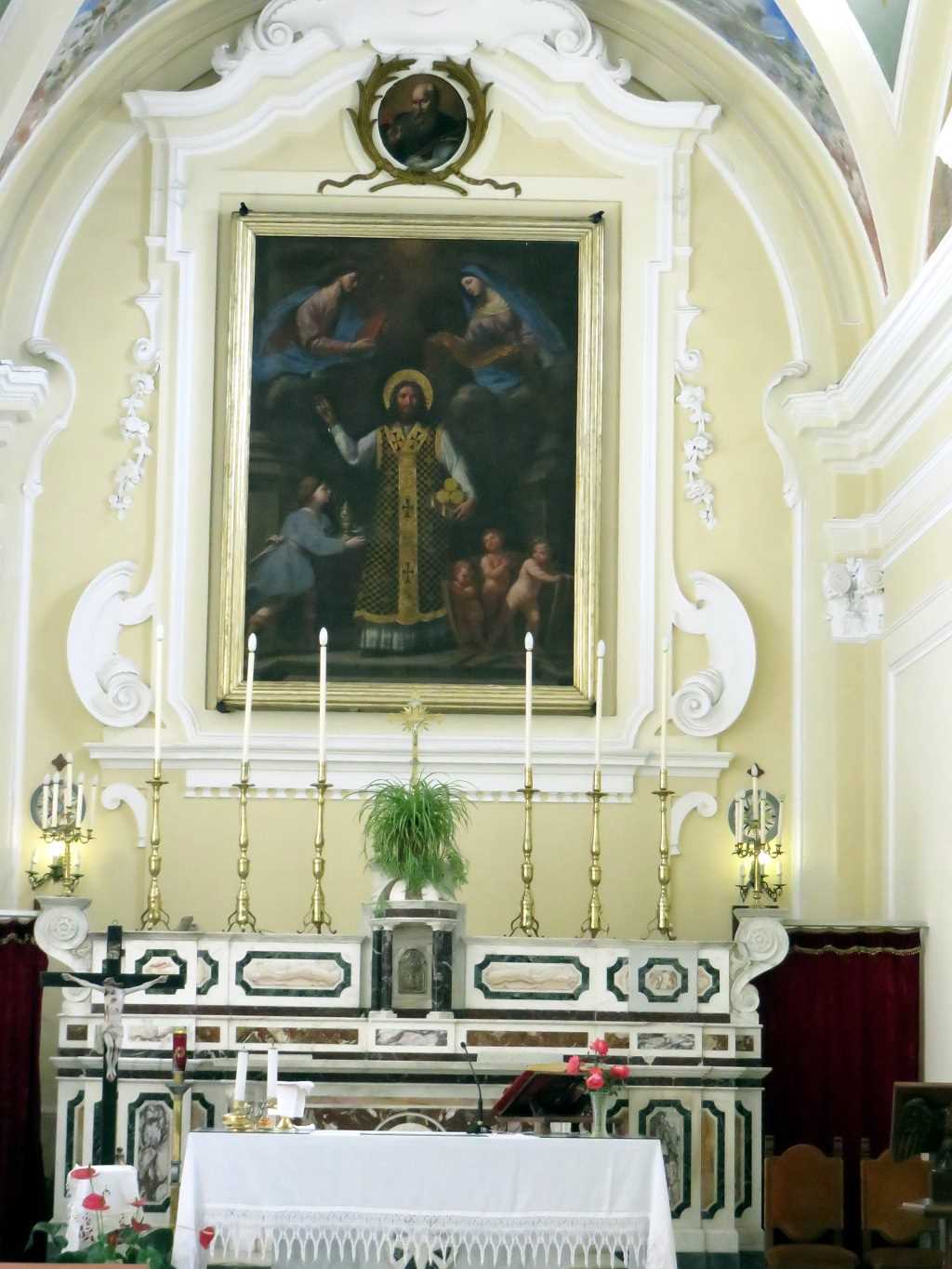
The altarpiece on the high altar, set in a rich stucco frame, depicting St. Nicholas from Bari is the work of master Andrea Vaccaro, who, according to scholars, made it presumably around 1650. The side altar contains a beautiful canvas depicting St. Anthony of Padua, attributable to painter Michele Ragolia, who is said to have completed the work around 1680.
The two side chapels contain two canvases depicting Our Lady of the Rosary and Our Lady of Mount Carmel, these attributed to an important Dutch painter of the 1600s.