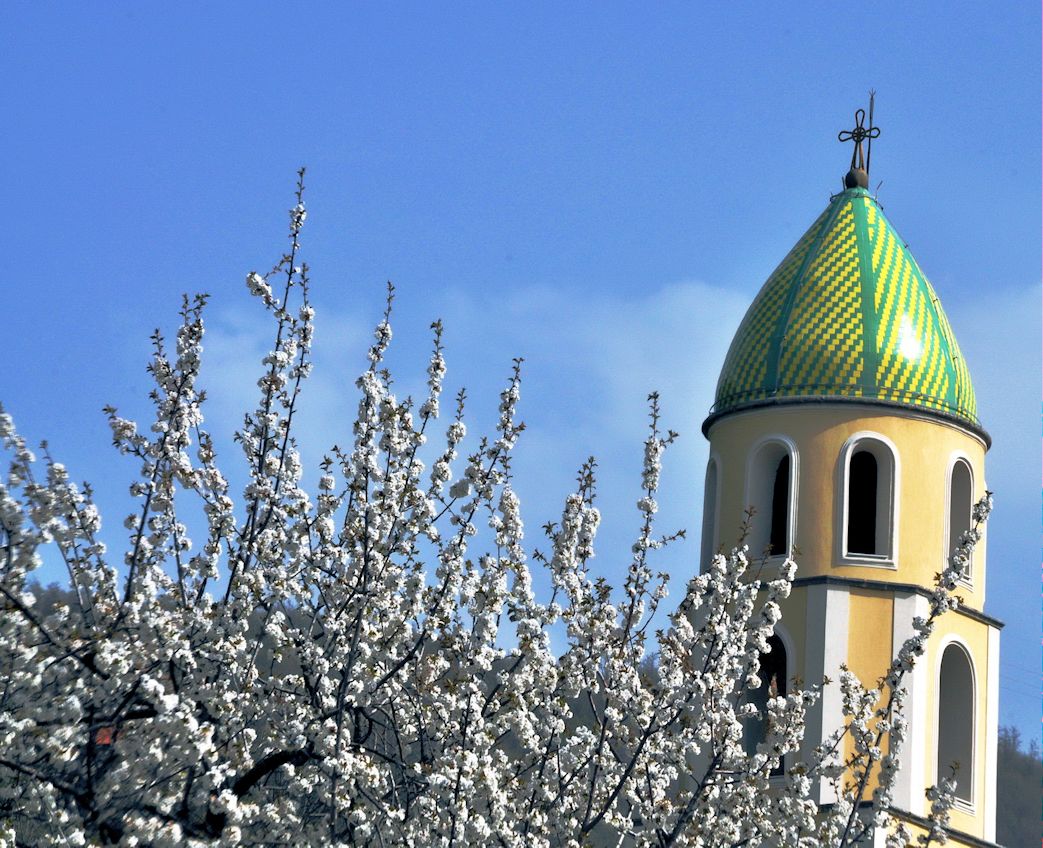
CHIESA SANTA MARIA LA MANNA
CHURCH S. MARY THE MANNA
Built in the 13th century, it has been renovated several times over the years and having suffered considerable damage with the 1980 earthquake event, it remained closed for a long time. Subsequently with the intervention of the Government, the Superintendence of Historical Heritage of Naples and the faithful of the hamlet, the church was restored and reopened for worship on August 14, 1999.
Description and artwork
Period: 13th century
The monumental complex of S. Mary the Manna stands in the hamlet of the same name in Agerola, in an isolated position in a rural foothill setting, rich in remarkable landscape and environmental values.
The original Romanesque church underwent a Baroque transformation probably during the 18th century, the interior in fact shows itself in a delicate and elegant Baroque guise that leaves, however, the original Romanesque layout clearly legible.
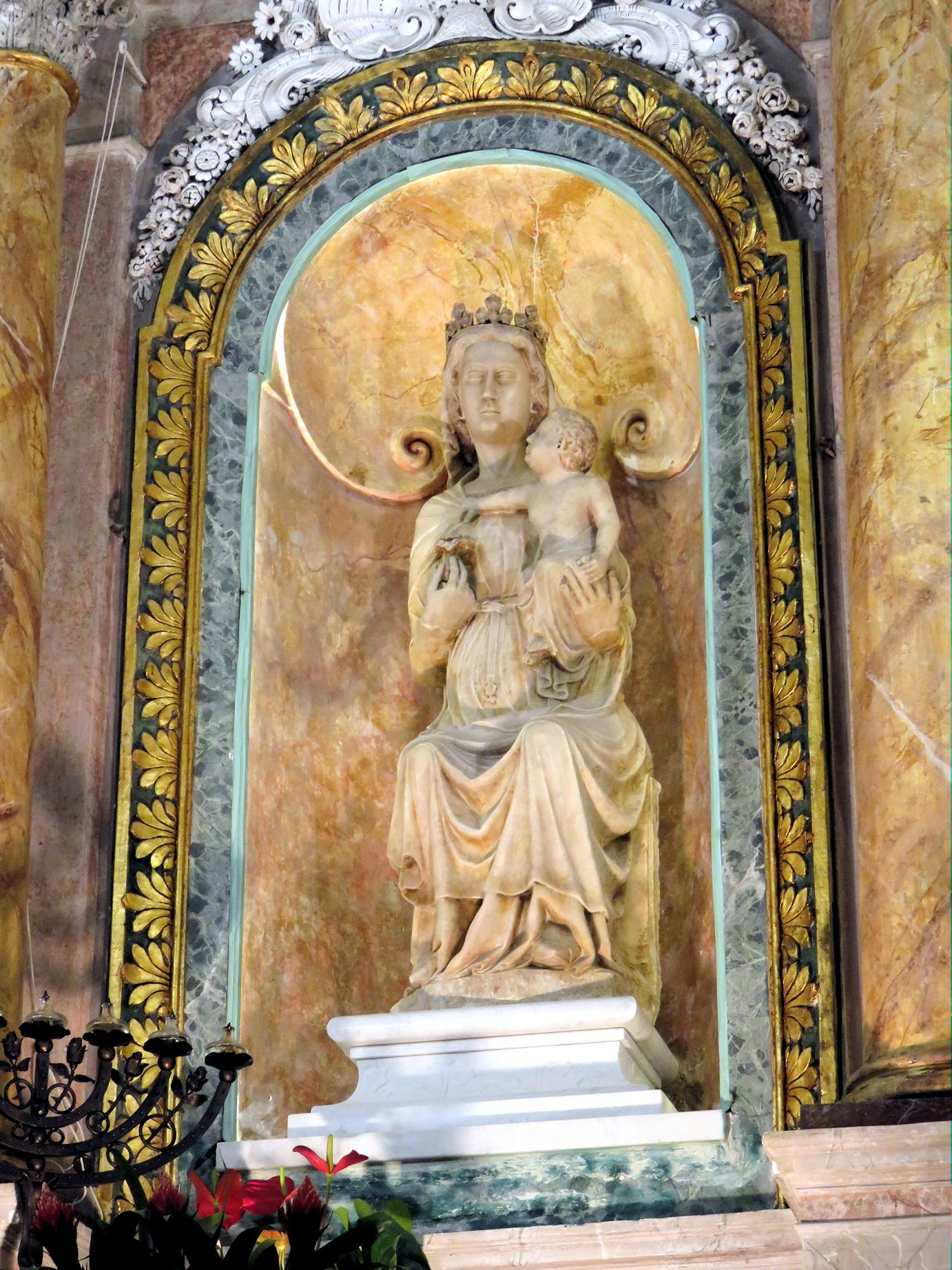
The artistic heritage that enriched the interior was partly damaged and partly stolen following the 1980 earthquake; among these, however, the masterpiece kept in the temple should be noted, namely the marble statue of the Madonna of the Manna, made in the 13th century by Nicola da Monteforte; this important sculptural work, the subject of interesting studies, is kept in a niche behind the high altar. Tradition has it that in memory of the miracle performed by Our Lady, who exuded droplets of heavenly liquid, the Virgin’s face is washed every year in August.
Sepulchral gravestones dating from the 16th and 17th centuries, which were set in the pavement of the church, were covered with 18th-century majolica, are now found affixed in a niche in the left aisle with other marble elements that testify to the antiquity of the building.
The ceiling is covered with an 18th-century Baroque-style canvas with paintings depicting the life of the Virgin.
Remains of an ancient early Christian church can still be seen in the crypt of the church.