MUSEO ETNOANTROPOLOGICO
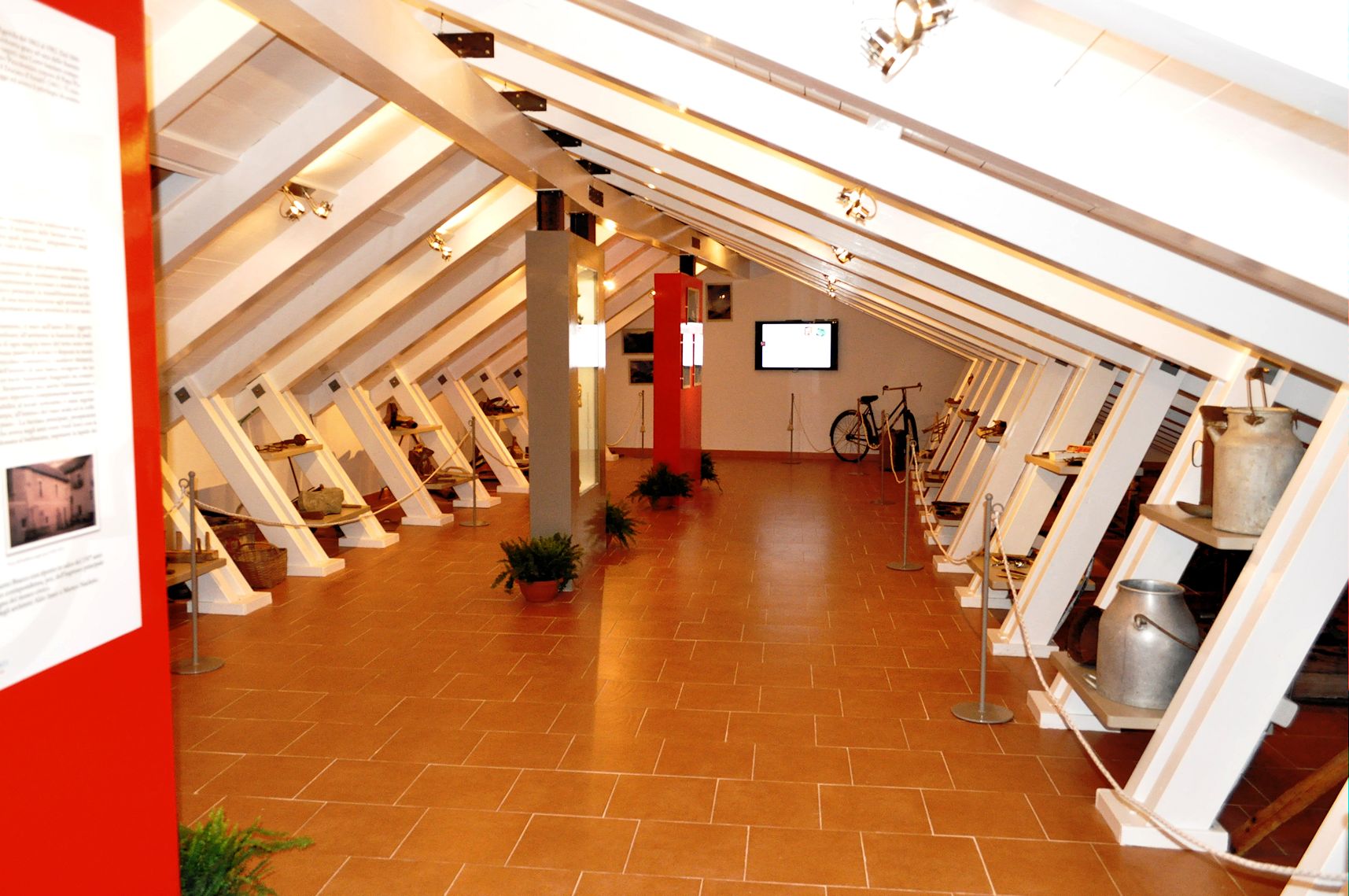
The Museum was created to preserve, in addition to the very important archaeological section, a minor, unofficial remembrance made up of the small everyday objects.
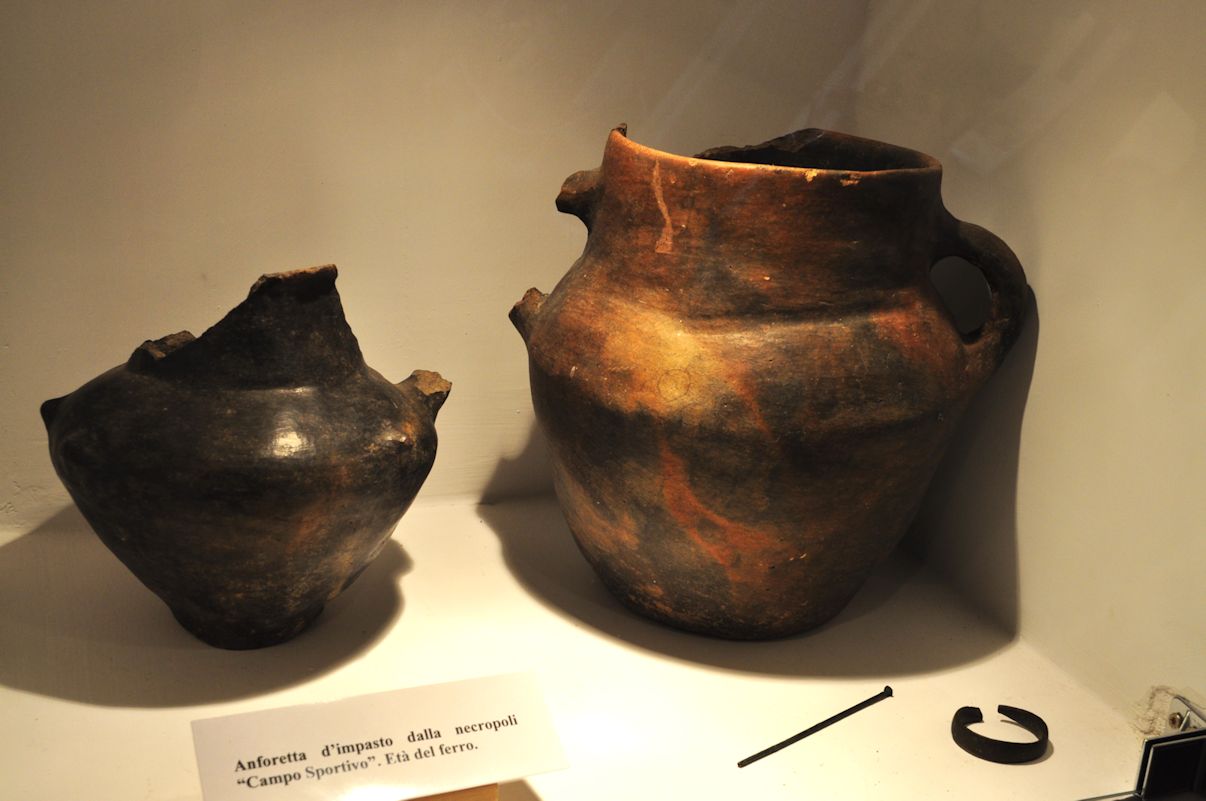
The Museum was created to collect evidence of the oldest anthropogenic settlements, through archaeological finds along with everyday objects from a time closer to us, but which is receding faster every day from our society and way of life. A real treasure, also embodied in authentic works of art of extreme value.
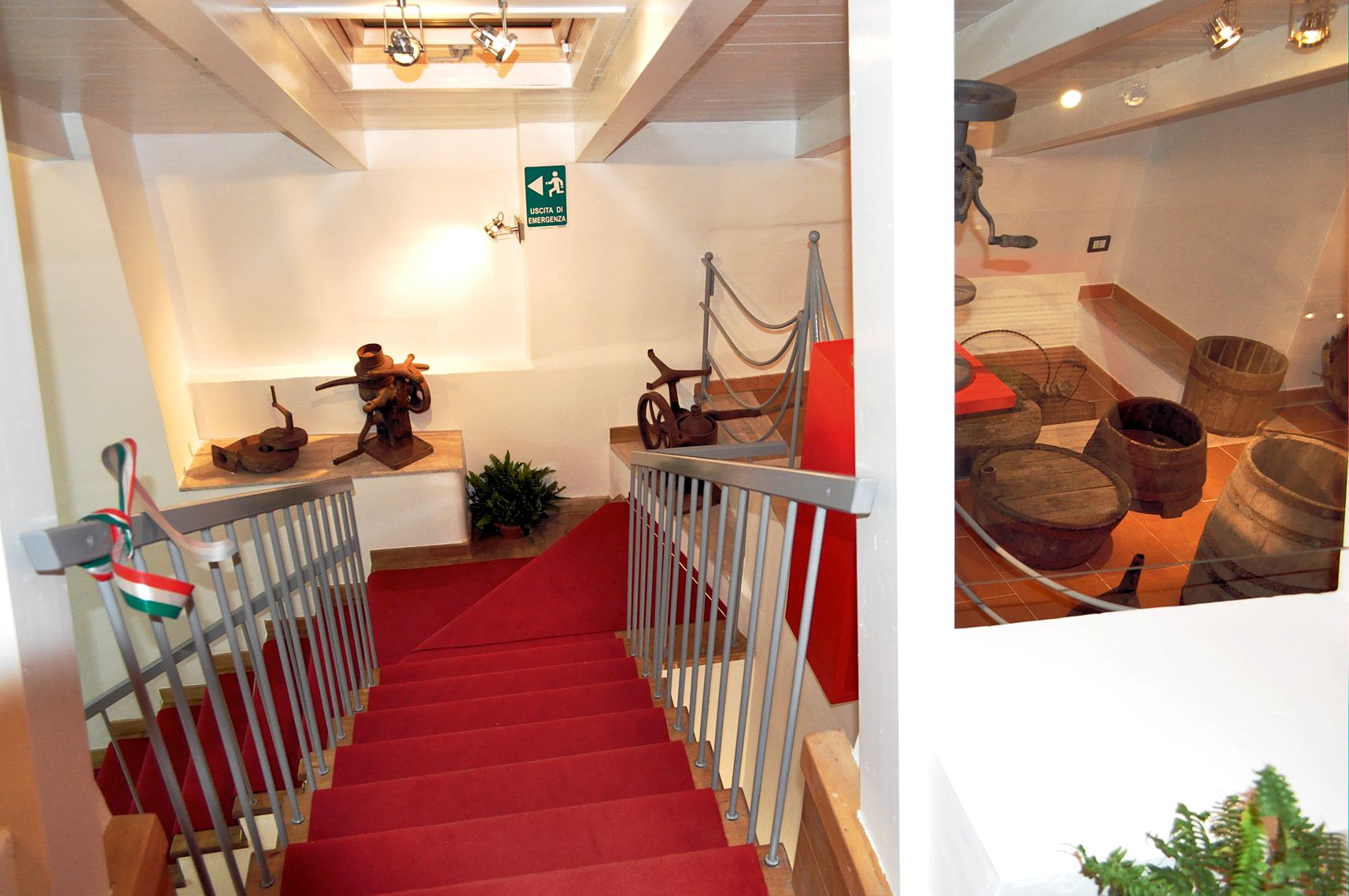
This place represents the will and dreams of men who have collected and preserved throughout a lifetime memories, objects and curiosities that testify, through the material culture of man, an bygone era. Through a rich collection of work tools, used for various generations in different activities, it aims to be a tribute to the industriousness of our ancestors.
A wealth of objects that will arouse interest and reawaken the memory of an ancient but still alive Agerola, that will renew the story of men as strong as the mountains and explorers as the sea. The Museum intends to convey an Agerola, just like its fields that smell of must and chestnuts, of wood for burning or to be shaped.
It is the gleam of iron wrought by skilled hands. It is the warmth of the kitchen where everything is poetry. Agerola, the anticipation of a long journey to gather fruit. Agerola, the whiteness of milk and magic.
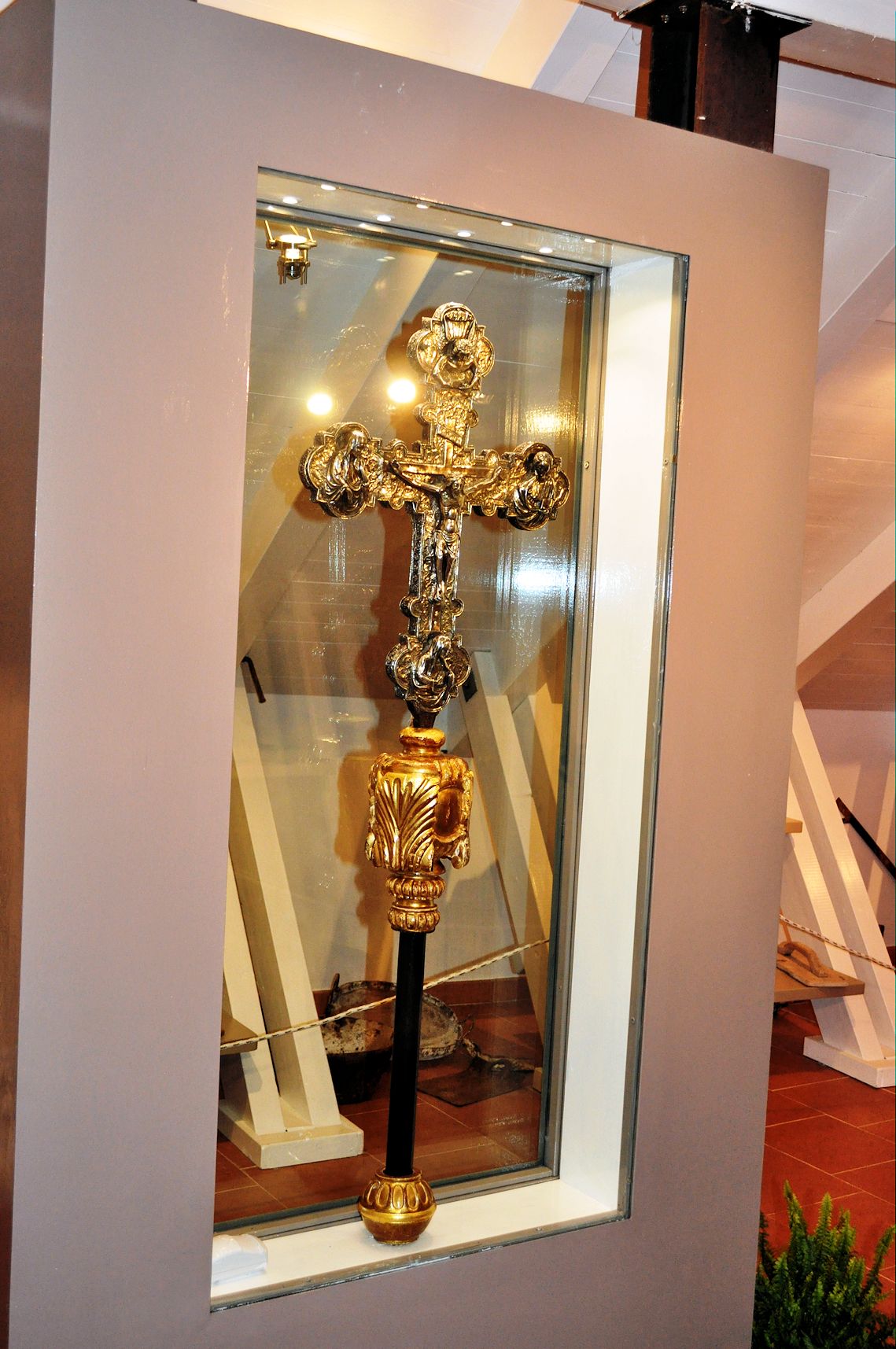
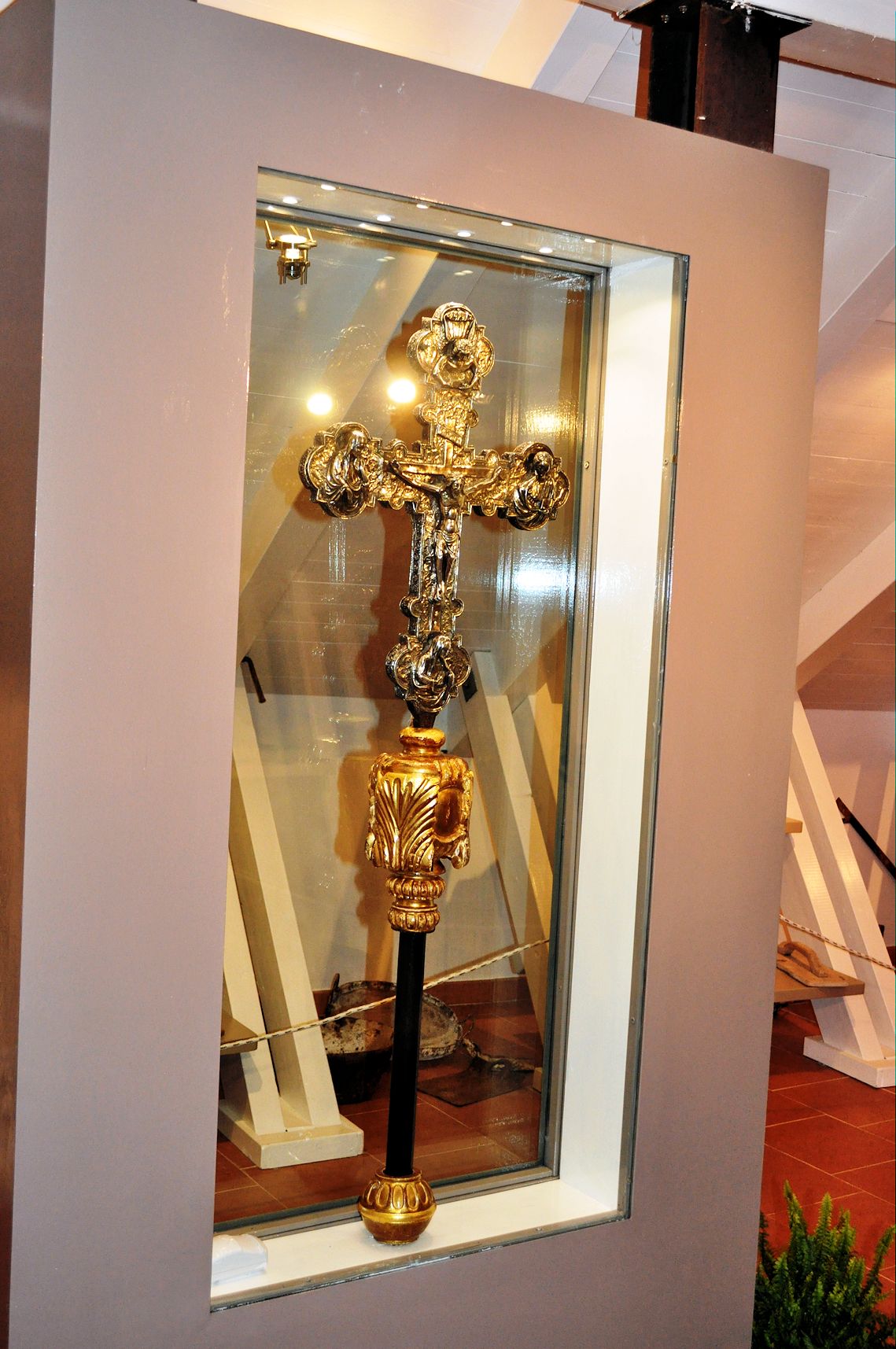
Recto: fondo bulinato e cesellato a “ramages” con al centro il Cristo in croce. Testata destra con S. Giovanni Evangelista. Testata inferiore con la Maddalena. Testata sinistra con la Madonna Dolente. Testata superiore con Angelo in volo (originariamente recante una corona).
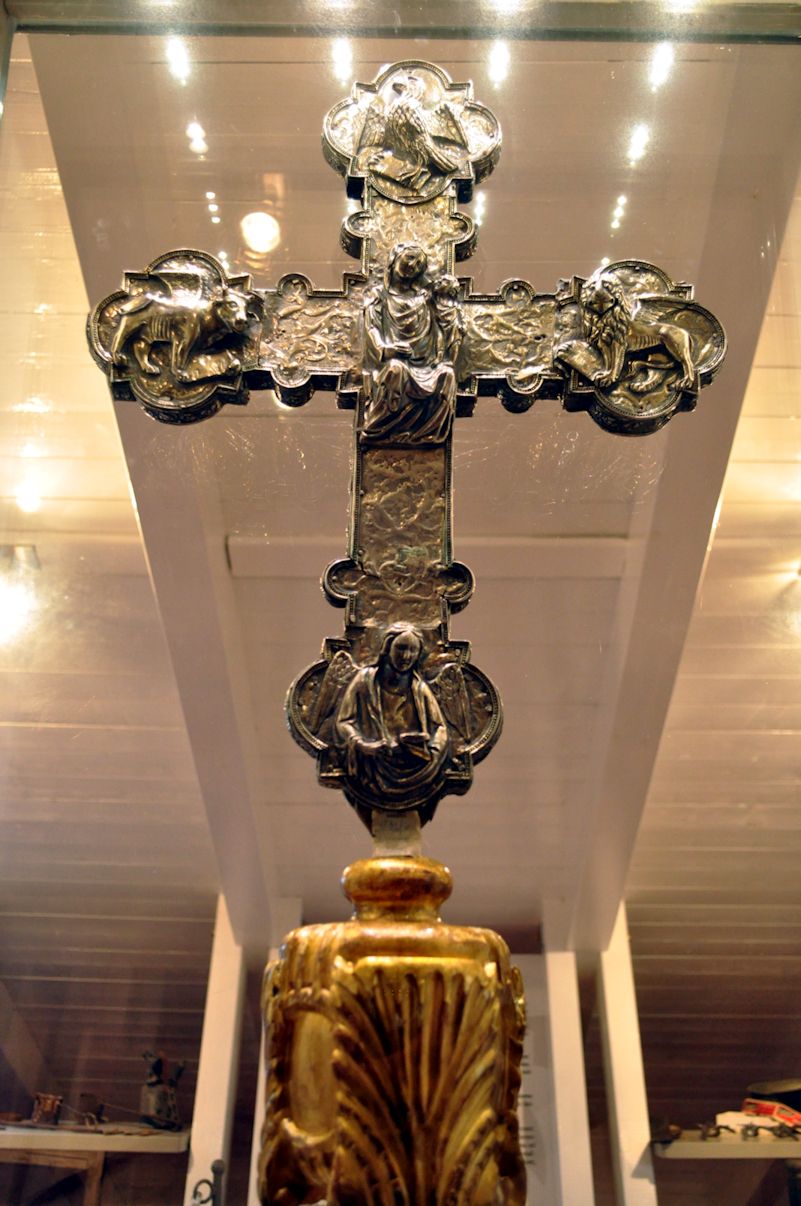
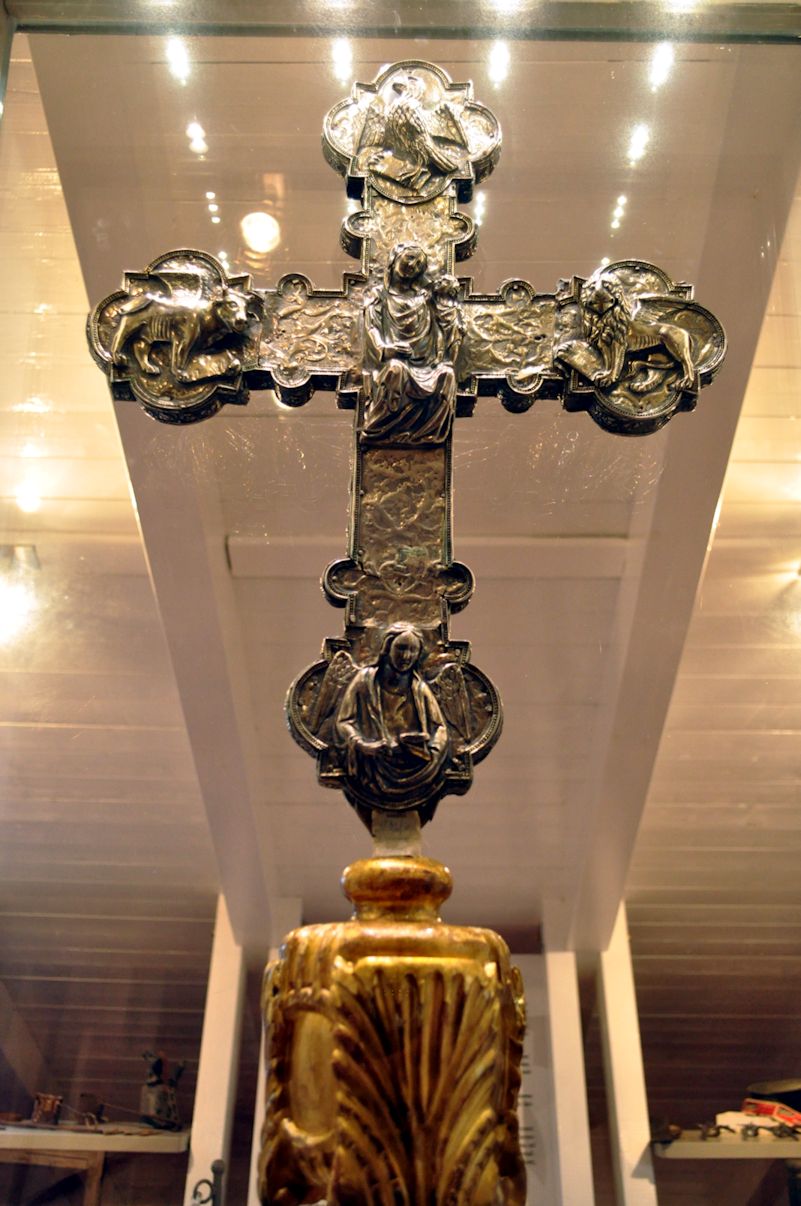
Verso: su un fondo decorato come l’altro lato appaiono la Madonna con il Bambino, al centro, e ai quattro lati, nelle testate dei bracci i simboli dei Quattro Evangelisti.
The Processional Cross, the work of an unknown Neapolitan silversmith, probably active in a center in the same Duchy of Amalfi of which Agerola was a part of.
It is a double-sided silver cross dating from the third quarter of the 15th century. The work follows the typical canons of the Middle Ages, both in the iconographic motifs of the decoration and in the structural geometries.
In addition to a general fineness of craftsmanship , this Cross is appreciated for the quality of the micro-sculptures that adorn it. Especially noteworthy are the tiny plastics on the verso, among which the Madonna and Child, in the center, stands out, which “still refers at the highest level to a traditionally medieval repertoire that ranges among the greatest examples of the major, even monumental, plastics of Central Italy.”