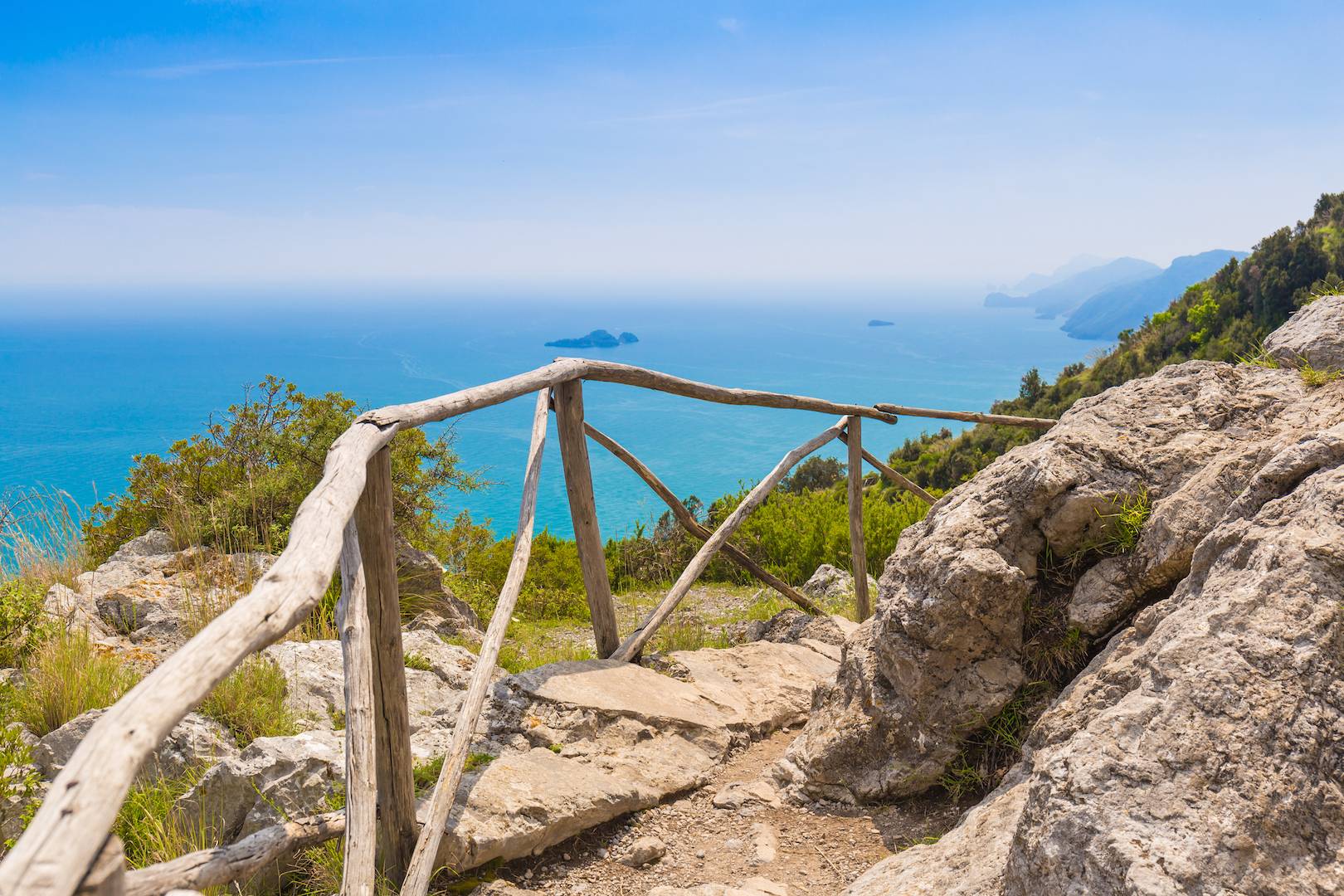
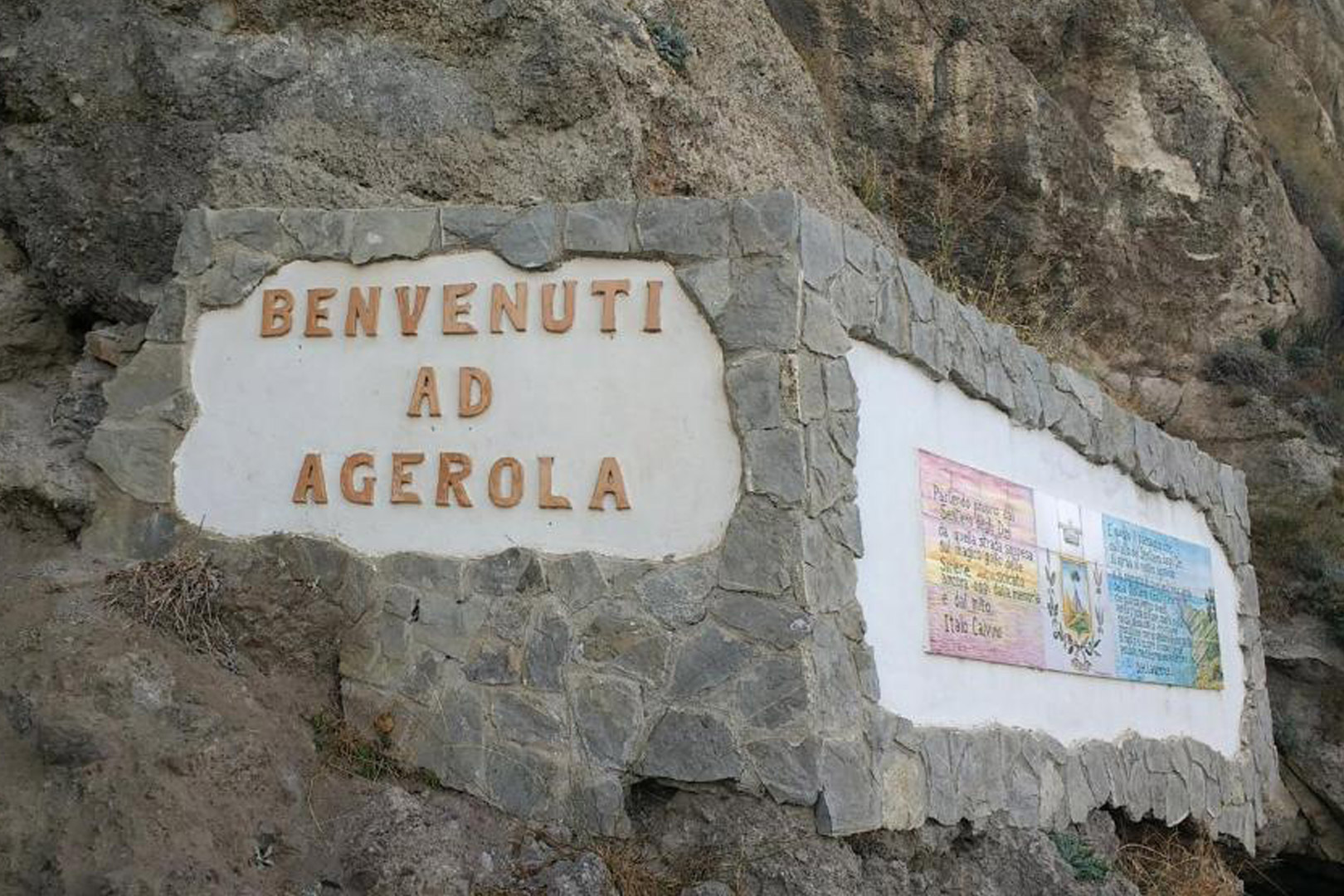
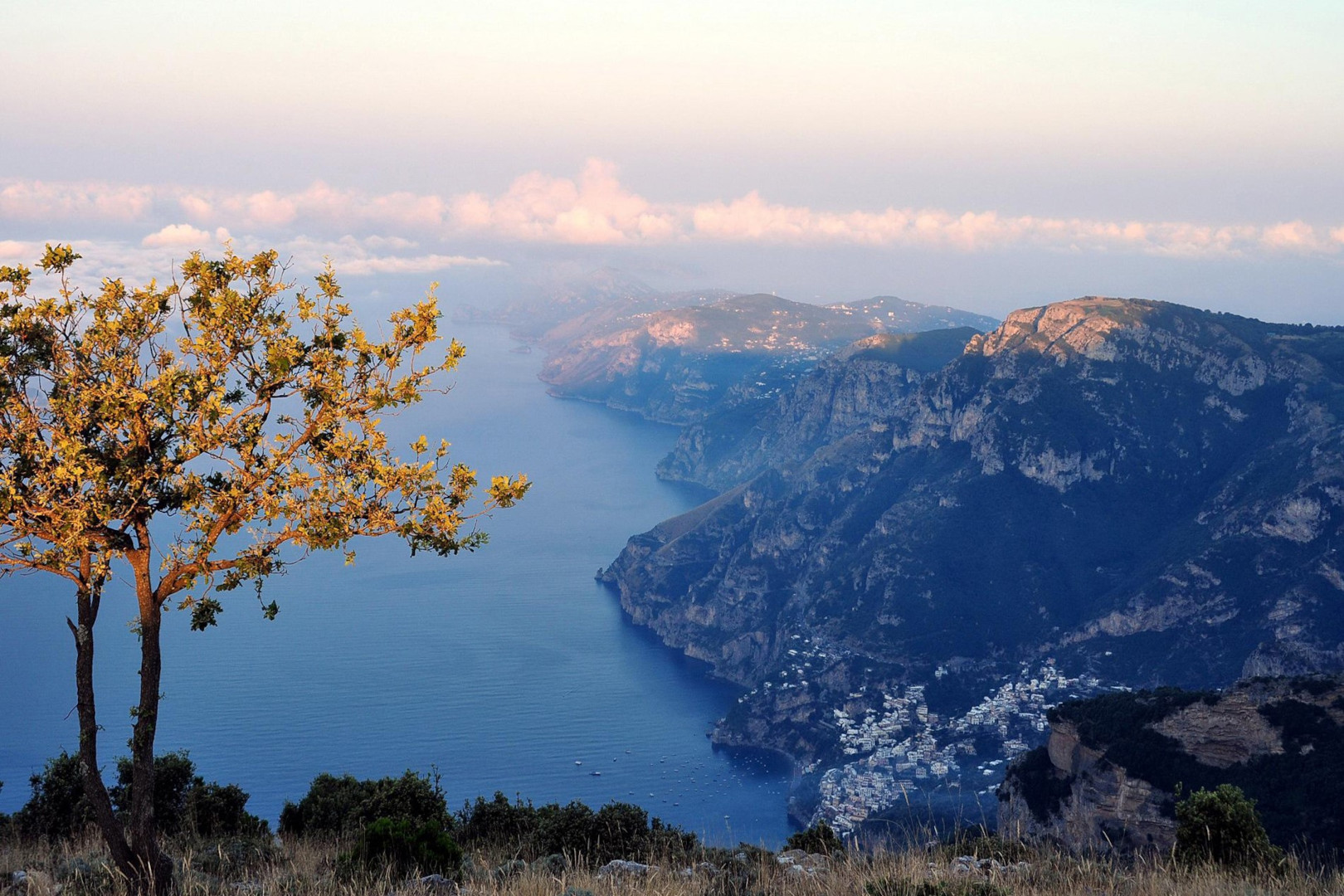
Agerola is a land rich in ancient and genuine traditions that represent its unique and special culture, these are embellished by a wide-ranging panorama that has been, and always is, a source of inspiration for all the arts. The land of the Gods, in fact, expresses the authenticity of Campania’s cultural heritage, through the will and dreams of men who have collected and preserved throughout a lifetime memories, which illustrate deep down, a bygone era, but still relevant today. Agerola is the land that smells of must, chestnuts and cheese, of wood for burning or working, where the glitter of iron wrought by skilled hands or the warmth of the kitchen always makes you feel at home … coveted destination even after a long journey, where everything is poetry! Here we find several historic buildings such as La casa della corte, a building dating back to 1461, which now houses the Museo Civico, home to a very important archaeological section and a peasant memory. The museum is also a showcase of art galleries and exhibitions of famous Campanian artists, from painting to sculpture to photography. In the land of the gods, pearls of art and traditions are revealed to be discovered. An ideal place for vacations, not only because of the great charm of the landscape, but also because of the presence of the Festival “On the Paths of the Gods,” which from July to September gives a continuum of remarkable encounters from music to theater, from culinary art to craft creations … event not to be missed!
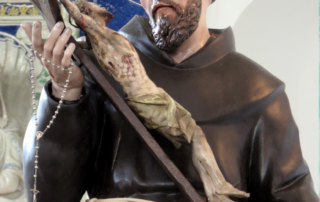
CHIESA MADONNA DI LORETO – Bomerano
Dating back to ancient times, the church Madonna di Loreto, Madonna 'o Rito, venerates a statue of St. Francis of Assisi, to whom is dedicated the feast day of October 4, the day of the festival of castane e ndorze, that is, boiled chestnuts and cobs, On the only altar is a beautiful polychrome terracotta, attributed, with some doubt, to the school of Luca Della Robbia. In ancient times it was the patronage of the family of Vito Antonio d'Acampora and currently entrusted to the care of the Mascolo heirs. The building was radically renovated after the 1980 earthquake. Period: uncertain
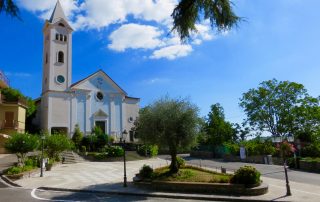
CHIESA MADONNA DELLE GRAZIE
The church is the scenic backdrop of Campora’s main square, on which it is located, for those coming from the lower part of the hamlet and heading toward San Lazzaro.
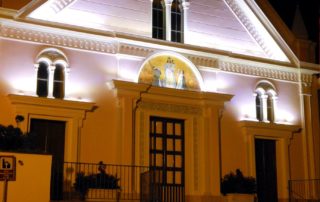
CHIESA DI TUTTI I SANTI
Another very old church in Bomerano is the one named All Saints, to which the archbishop of Amalfi, Angelo Pico, donated around 1640 the relics of Saints: Francis Xavier, Ignatius, Filippo Neri, Abbondio, Ponziano, Severino, Candido, Giusto, Fausto, Placido, Concordo and Platilla. Scarce and fragmentary are the documents concerning the foundation and evolution of the church named after All Saints. It would seem to have already existed in the second half of the 15th century, when there was probably a chapel or small church where the Virgin was worshipped. From the time of its alleged origin, dated around the 15th century due to the discovery of a fragment of a fresco, which about two centuries later was preciously recovered and preserved, there is no evidence until the 19th century. The creation of the wooden roof, and other interventions related to it, can be attributed to that century. Recently, a restoration has been completed that has enhanced the building in its entirety. In 1709 the church's property was administered by 4 lay governors elected one for each hamlet ob devotionem Universitatis, which had the patronage.
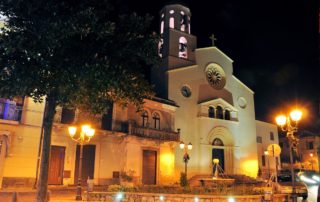
CHIESA SAN MATTEO APOSTOLO
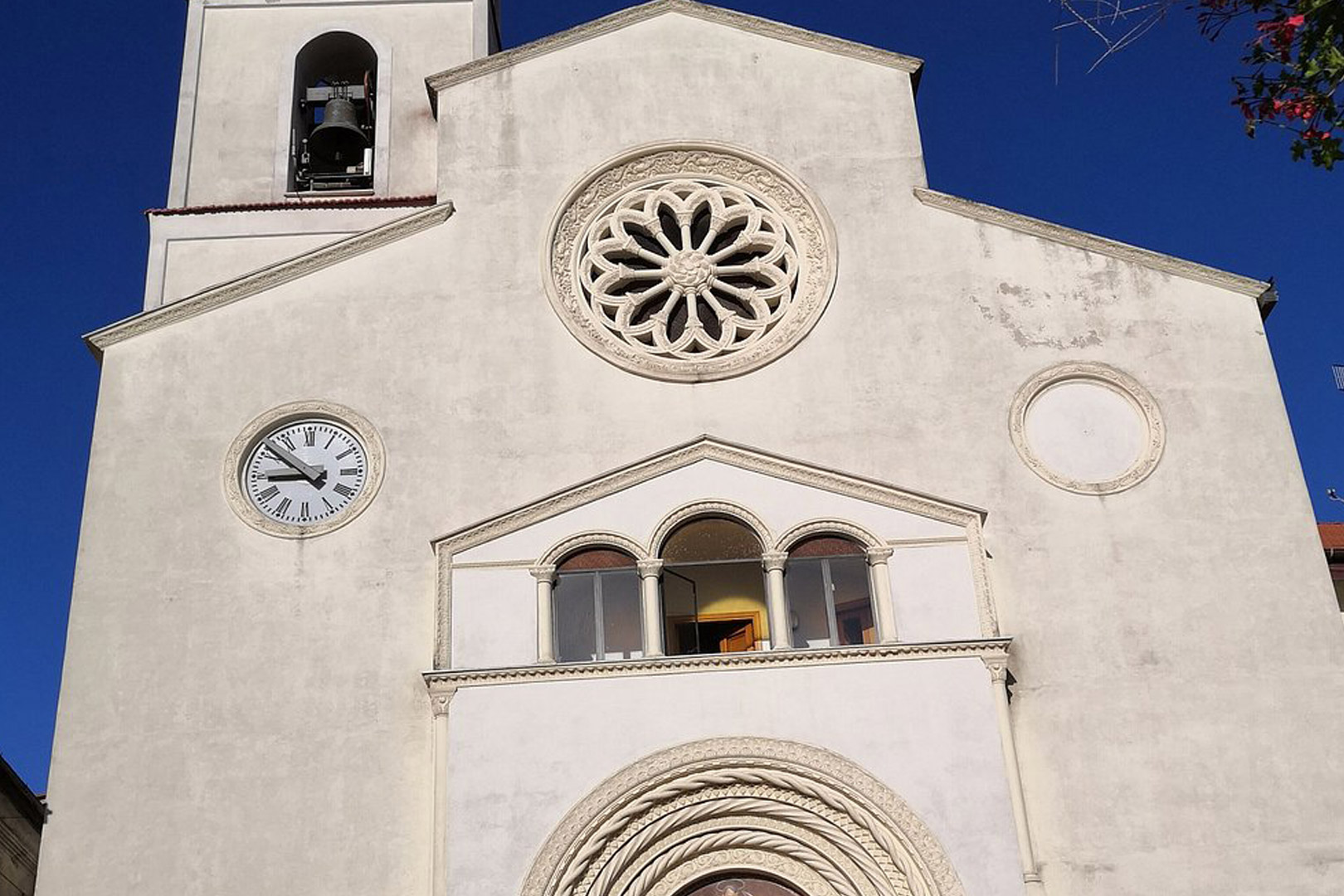
The church dedicated to St. Matthew the Apostle, in addition to being an important historical-architectural emergence of Agerola is, with its elegant facade, the prominent element of Bomerano’s central square The earliest records date back to 1158, which reported it to be located southwest of the ancient town of Bomerano, one of the four hamlets into which Agerola was divided in medieval times. Having been destroyed, it was built in 1580 in Paolo Capasso Square. In 1577 the rectory house was built by presbyter Francesco Avitabile, as shown by a marble epigraph on the facade.
CAPPELLA SAN CRISTOFARO
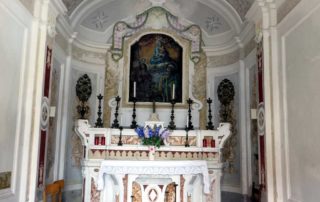
Of very ancient origin, it is patronage of the Lauritano inheritors. It was first interdicted on October 22, 1706, so that it could be decorated and repaired. The oldest record retrieved dates to 1682, when its priest Don Carlo Lauritano dictated in a will his intentions on the destination of the chapel. It was restored by the Lauritano family in 1993.
CAPPELLA SANT’ANNA
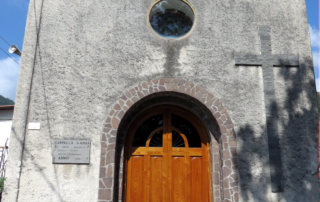
It has a rectangular shape, raised on the backside wall with a niche for bells. This chapel of patronage of the family of Cardinal Lorenzo of Brancati Barons was founded in 1623 by Baron Bartolomeo Brancati, whose tombstone is preserved in the aristocratic chapel. Tradition has it that a member of this family was a cardinal who lived in the second half of the seventeenth century.