USEFUL NUMBERS
Useful numbers

HOW TO GET HERE
If you arrive by car from the North (Autostrada del Sole A1): travel along the entire motorway until the Caserta Sud toll booth. Continue straight until you join the A3 Naples-Salerno-Reggio Calabria. Exit at Castellammare di Stabia and continue straight on the highway to Sorrento. Exit at Gragnano and follow the signs for Agerola. If you arrive by car from the South: in Salerno take the A3 motorway to Naples; exit at CastellAMmare di Stabia and continue as in the instructions for those coming from the North. Alternatively: leave the A3 at Vietri sul Mare and then follow the Statale 163. Once past Amalfi, take the Provincial road to Agerola. By public transport from Naples: Circumvesuviana railway runs from Naples-Piazza Garibaldi to Castellammare di Stabia (Via Nocera stop); then SITA bus to Agerola. Alternatively; SITA bus to Agerola or Amalfi via Agerola, with departures from the port of Naples (Largo Immacolatella) and stop at the Napoli Centrale railway station (Via G. Ferraris). In the summer months the Naples-Amalfi stretch can also be done with the Metrò del Mare, with departures from the Maritime Station, Terminal Angioino. By public transport from Salerno: SITA bus from Via Vinciprova, or from the railway station square, to Amalfi; then another SITA trip to Agerola. In the summer months the Salerno-Amalfi stretch can also be done with the Metrò del Mare, which leaves from Molo Manfredi. If you arrive by plane in Naples Capodichino: use the Alibus routes to reach Piazza Garibaldi or the port and continue by public transport.
HISTORICAL NOTES
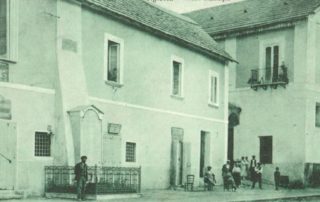
The territory of Agerola was first reached by the Osci, ancient Campanian people who stemmed from the union of the strong Samnite with the Opian mountaineers, in the 5th century B.C. The Osci or Oschi pushed as far as Sorrento through the Lattari Mountains after founding the Republic of Nucera, which in 474 B.C. included the territories of Nocera, Pompeii, Stabia, Herculaneum and Sorrento. Roman times ruins and artifacts were unearthed, at different times, in the Radicosa area, in Ponte hamlet and in the St. Barbara grotto. Vases, oil lamps, coins of the early Roman emperors, amphorae of various sizes, libation bowls, various terracotta vases, bricks, grindstones, remains of buildings and courtyards, pavements of ancient roads, metal objects, etc. were discovered at these sites. Among the various settlements that occurred over the centuries we find that in 89 B.C., when Stabia and Gragnano were assaulted by the soldiers of the Roman general Lucius Cornelius Sulla, many refugees from these cities relocated in our hills’ villages. The population growth of Agerola was also influenced by the inhabitants of the coastal cities trying to escape the Saracens’ devastations.
IL PERSONAGGIO
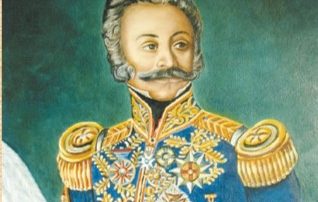
Agerola's most distinguished citizen was General Paul C. M. Avitabile (1791 - 1850) who began his military career in the Murattian army and continued it first with the Shah of Persia and then with the Sikh ruler Ranjit Singh, who appointed him general and governor first of Wazirabad and then of the most difficult to control Afghan province: Peshawar. Back home he went first to Paris, where he was awarded the Legion of Honor, and then to London, a guest of Queen Victoria. In Italy General Avitabile resided first in Naples, then in Castellammare di Stabia and finally in Agerola, where he died-in circumstances never fully clarified-in the beautiful palace he was completing in S. Lazzaro. It was demolished in 1937 to make way for the Colonia Montana. On the entrance facade of the palace he had "O Beata Solitudo, O Sola Beatitudo" written.